


Resealable Bags Buying Guide for Food, Retail, and Shipping
Why Your Packaging Choice Matters More Than You Think
A damaged product return costs Australian businesses an average of $28 per item when you factor in shipping, restocking, and lost customer trust. The wrong resealable bags can quietly drain your profit margins through product spoilage, customer complaints, and wasted inventory that doesn't fit properly. This guide walks you through choosing resealable bags packaging that actually protects your bottom line, whether you're shipping handmade soaps, storing bulk ingredients, or displaying retail products.
What are the main types of resealable bags available for businesses?
The four main types of resealable bags for businesses are zip lock bags (with interlocking plastic tracks), press-to-seal bags (with adhesive strips), slider bags (with a sliding mechanism for closure), and tin-tie bags (with a metal wire closure). Each type offers different levels of security, ease of use, and cost effectiveness depending on the product being packaged.
How much do resealable bags cost for Australian businesses in bulk?
Australian businesses typically pay between $0.05 and $0.35 per resealable bag when ordering in bulk quantities of 1,000 units or more, with basic zip lock bags at the lower end and premium slider or stand-up pouches with custom printing at the higher end. Volume discounts of 15-30% are standard when ordering 10,000 units or more from Australian suppliers.
What thickness should resealable bags be for food products?
Food-grade resealable bags should have a minimum thickness of 50 microns (2 mil) for dry goods and 75-100 microns (3-4 mil) for products requiring moisture protection or longer shelf life. Bags meeting Australian food safety standards must be labelled as food-safe and comply with Food Standards Australia New Zealand (FSANZ) regulations.
Table of Contents
- Why Your Packaging Choice Matters More Than You Think
- Understanding Resealable Bag Types
- Matching Bag Features to Your Business Needs
- Feature Checklist by Business Type
- Understanding Bag Dimensions
- Storage and Quantity Planning
- Clarity Grades and What They Mean
- Premium Versus Budget Comparison
- Real Cost Analysis for Australian Businesses
- Making Your Final Decision
- Common Questions About Resealable Bags
Understanding Resealable Bag Types
Most businesses waste money buying the wrong type of resealable bags for their products. The packaging industry offers three main types of resealable bags, and each one works better for different situations. Choosing the right material can mean the difference between products that stay fresh for weeks or spoil in days. Understanding what makes each bag type unique helps you pick the best option for your specific needs without overspending on features you don't actually need.
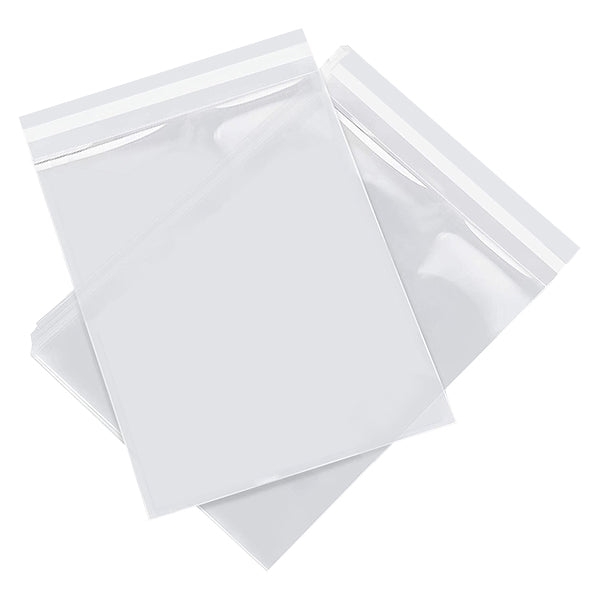
50 x 100mm + 30mm OPP Cellophane Resealable Plastic Bags
OPP Cellophane Bags Basics
OPP stands for oriented polypropylene, which is just a fancy way of saying clear plastic that's been stretched to make it stronger. These clear resealable plastic bags are the most popular choice for small businesses because they're affordable and let customers see exactly what's inside. Our 50 x 100mm OPP cellophane bags work great for jewellery, craft supplies, and small food items that don't need heavy-duty protection.
The main benefits of clear resealable bags include:
- Crystal clear transparency that shows off your products
- Lightweight design that keeps shipping costs down
- Water-resistant surface that protects against light moisture
- Cost-effective pricing for bulk orders
Aluminium Foil Bags for Protection
Resealable foil bags take protection to the next level with their metallic barrier. These bags block out light, oxygen, and moisture much better than regular plastic. They're perfect for coffee, tea, dried herbs, and anything that loses flavour or quality when exposed to air.
Key features of aluminium foil resealable bags packaging:
- Complete light blocking to prevent UV damage
- Superior oxygen barrier that extends shelf life
- Moisture protection that keeps products dry
- Professional metallic appearance for premium products
- Stand-up designs available like our 350 x 500mm stand-up foil bags
Mylar Bags and Barrier Properties
Resealable mylar bags sit somewhere between OPP and foil in terms of protection and cost. Mylar is actually a brand name for a type of polyester film that's been metallised. These bags offer better barrier properties than plain plastic but cost less than full aluminium foil bags.
What makes mylar different:
- Moderate light blocking with a shiny finish
- Good oxygen barrier for medium-term storage
- Tear-resistant material that's harder to puncture
- Available in various colours and finishes
Comparing Bag Materials
The right choice depends on what you're packaging and how long it needs to stay fresh. According to ePac Flexible Packaging's guide on resealable bag diversity, different closure types and materials serve specific purposes in product protection. Here's a quick comparison of the three main types:
| Feature | OPP Bags | Mylar Bags | Foil Bags |
|---|---|---|---|
| Transparency | 100% clear | Partially visible | Opaque |
| Light Protection | None | Moderate | Complete |
| Oxygen Barrier | Low | Medium | High |
| Cost Level | Budget | Mid-range | Premium |
| Best For | Display items | Snacks | Coffee, herbs |
Small resealable bags in any of these materials work well for different business needs. The key is matching the protection level to your product's requirements without paying for features you don't need.
Matching Bag Features to Your Business Needs
Most businesses waste money buying the wrong bags because they focus on price instead of features. The truth is, a cheap bag that doesn't protect your product costs you more in returns and damaged goods than a slightly pricier option that does the job right. When you're choosing resealable bags packaging, you need to think about what your specific products actually need, not just what looks good on the shelf.
The first decision you'll face is whether you need transparent or opaque bags. Clear resealable plastic bags work brilliantly for products where customers want to see what they're buying, like jewellery, craft supplies, or food items. Our 50 x 100mm OPP cellophane bags are crystal clear and let customers inspect contents without opening the package. On the other hand, resealable foil bags like our premium aluminium foil zip lock bags block light and moisture, which matters a lot if you're packaging coffee, tea, or anything that degrades with exposure.
Feature Checklist by Business Type
- Food businesses: Need food-safe certifications, strong seals, and often require opacity to protect from light
- Retail stores: Benefit from clear bags that showcase products and professional appearance
- E-commerce sellers: Require durable bags that survive shipping and handling
- Craft and hobby shops: Work best with transparent bags in various sizes for different small items
- Wholesale distributors: Need bulk quantities with consistent quality across large orders
Thickness matters more than most people realise. A 40-micron bag handles everyday items just fine, but if you're shipping products that have sharp edges or need extra protection, you'll want something thicker. The resealability strength also varies depending on how often customers will open and close the bag. Understanding proper resealable bag usage helps you pick the right seal type for your needs.
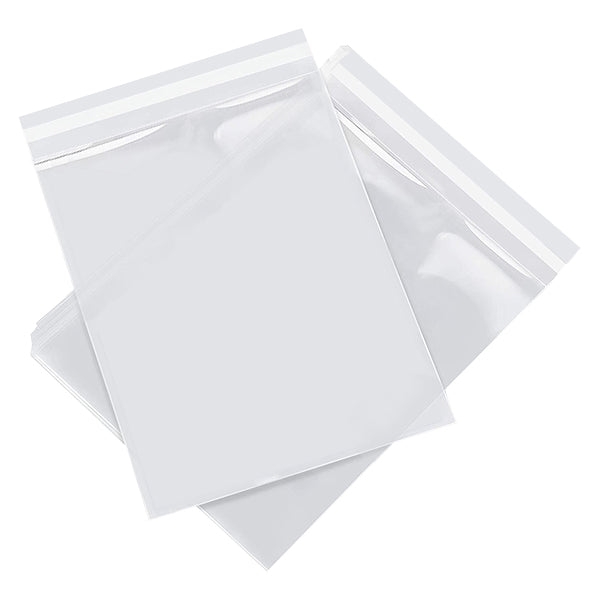
Wholesale Pack of 10,000 - 50 x 100mm + 30mm Lip OPP Resealable Plastic Bags
Getting the Right Size and Quantity
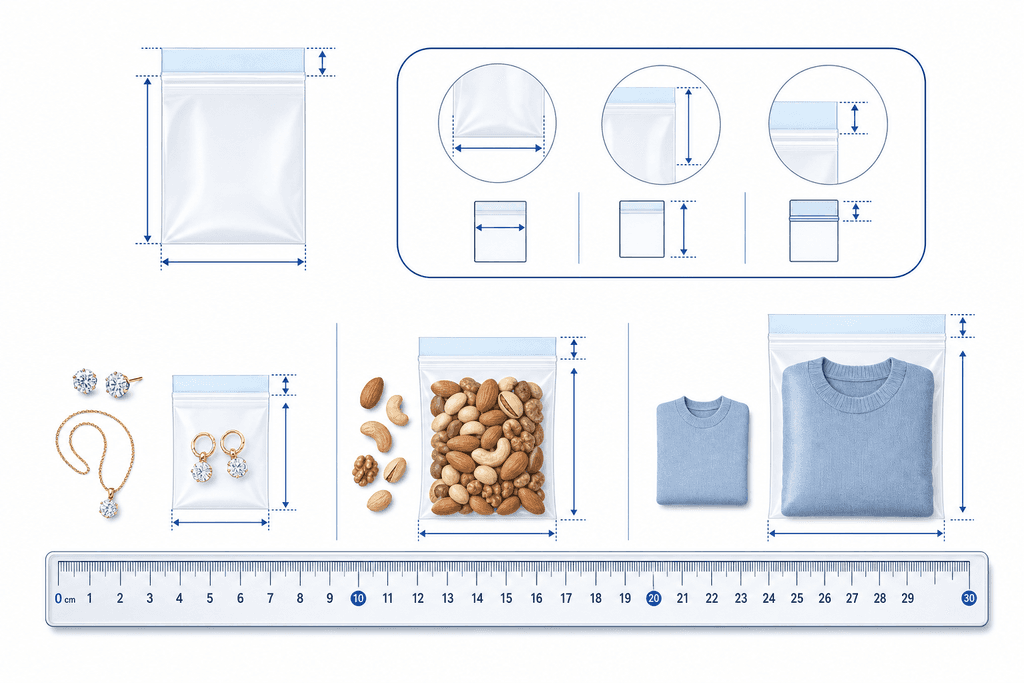
Measuring your products correctly saves you from ordering bags that are too small or wasting money on oversized ones. You need to measure the length, width, and height of your product, then add at least 10-15mm to each dimension for comfortable fit. Don't forget that small resealable bags need extra space at the top for the seal to work properly. That's why our bags include lip dimensions, like the 30mm lip on our wholesale OPP bags, which gives you room to seal without cramping your product.
Understanding Bag Dimensions
| Product Size | Recommended Bag Size | Lip Space Needed |
|---|---|---|
| 40 x 80mm | 50 x 100mm | 30mm |
| 100 x 120mm | 110 x 150mm | 30-40mm |
| 300 x 400mm | 350 x 500mm | 60mm |
The gusset dimension on stand-up bags changes everything for bulkier items. A 60mm gusset on a bag measuring 350mm x 500mm means you can fit products that need depth, not just flat items. This makes them perfect for coffee beans, dried fruits, or any product that benefits from standing upright on a shelf.
Bulk buying versus small orders depends entirely on your business stage and storage capacity. If you're just starting out, ordering 100 bags at $3.22 makes sense while you test the market. But once you know what sells, jumping to our wholesale pack of 10,000 bags at $239.95 drops your cost per unit dramatically. That's about $0.024 per bag versus $0.032, which adds up fast when you're packaging hundreds of products monthly.
Storage and Quantity Planning
- Small orders (100-500 bags) fit in a desk drawer or small shelf
- Medium orders (1,000-5,000 bags) need about one cubic metre of storage space
- Wholesale orders (10,000+ bags) require dedicated storage area or shelving unit
- Calculate 3-6 months of usage to balance cost savings with storage constraints
Quality Indicators That Actually Matter
Pack smarter. Ship with confidence.
Everything you need to pack, protect and send.
Discover dependable packaging for eCommerce, retail and wholesale—selected for quality, value and hassle-free shipping across Australia.
- Low minimum orders
- Samples available
- Australia-wide delivery
Micron thickness tells you how durable a bag will be under real-world conditions. A 40-micron bag offers solid protection for most retail and e-commerce applications without being unnecessarily thick. Thinner bags around 25-30 microns work fine for lightweight items like greeting cards or paper products, but they'll tear easily if you're packaging anything with corners or weight. Food packaging requires specific thickness standards to maintain freshness and meet safety regulations.
Testing seal strength doesn't require fancy equipment. Fill a bag with your product, seal it, then gently try to pull the seal apart. A quality seal shouldn't budge with normal handling pressure. You can also do a drop test by sealing a bag with something moderately heavy inside and dropping it from waist height onto a hard surface. If the seal holds and the bag doesn't tear, you've got decent quality.
Clarity Grades and What They Mean
Crystal clear bags like OPP cellophane show products with minimal distortion and no cloudiness. This matters when you're selling items where appearance drives purchase decisions. Lower quality bags often have a slightly milky or hazy appearance that makes products look less appealing. The transparency grade affects how professional your packaging looks, which directly impacts customer perception of your brand.
Premium Versus Budget Comparison
| Feature | Budget Bags | Premium Bags |
|---|---|---|
| Micron thickness | 25-30 microns | 40+ microns |
| Seal strength | Basic, 3-5 uses | Strong, 10+ uses |
| Clarity | Slightly hazy | Crystal clear |
| Food-safe certified | Sometimes | Always |
Food-safe certifications matter if you're packaging anything edible or that touches skin. Our bags meet food-safe standards, which means they don't contain harmful chemicals that could leach into your products. This isn't just about compliance, it's about protecting your customers and your business reputation.
Common quality issues include weak seals that fail after a few uses, bags that tear easily at the corners, and inconsistent sizing across a batch. When you're paying more for premium features like double aluminium foil construction or thicker materials, you're buying reliability and consistency. That matters when you're building a business that depends on customer satisfaction and repeat purchases.
Real Cost Analysis for Australian Businesses
Most Australian businesses lose between 15-30% of their packaging budget to hidden costs they never see coming. When you're choosing resealable bags packaging for your business, the sticker price is just the beginning of what you'll actually pay. The real numbers tell a different story once you factor in product damage, customer complaints, and the time your staff spends dealing with faulty packaging. Understanding the complete cost picture helps you make smarter decisions that protect your bottom line instead of slowly draining it.
Breaking Down Unit Costs by Volume
The price difference between small and bulk orders can make or break your packaging budget. Packee's 50 x 100mm + 30mm clear resealable plastic bags cost $3.22 for a small pack, which works out to roughly $0.064 per bag. Scale up to the wholesale pack of 10,000 units at $239.95, and your per-unit cost drops to just $0.024 per bag.
Cost Savings Alert: Buying in bulk saves you 62.5% per unit compared to small pack purchases
That's a 62.5% reduction in your per-unit cost just by ordering smarter. For a business packaging 500 items per month, that's the difference between spending $384 annually versus $144.
Hidden Expenses That Eat Your Profits
Cheap resealable bags from competitors like thepackagingpeople.com.au or ozpack.com.au might look attractive upfront, but they come with costs you won't see until it's too late. Poor quality packaging creates a domino effect of expenses that add up fast.
- Product spoilage from bags that don't seal properly costs businesses an average of 8-12% of inventory value
- Customer service time dealing with complaints about damaged goods averages 15-20 minutes per incident
- Return shipping and replacement costs can run $8-15 per failed delivery
- Lost repeat customers due to poor packaging experiences represent 3-5x the original sale value
Product Protection Equals Money Saved
The 40-micron thickness in Packee's clear resealable bags prevents the kind of tears and punctures that lead to product loss. When you're selling food items, cosmetics, or small parts, even a 5% reduction in damaged goods pays for the upgrade to better packaging within the first quarter.
| Order Volume | Cost Per Unit | Annual Savings |
|---|---|---|
| 100 units | $0.064 | Baseline |
| 10,000 units | $0.024 | $240 saved |
Customer Satisfaction Drives Repeat Business
Your packaging is the first physical touchpoint customers have with your product. Research from retail packaging studies shows that 67% of customers form their quality impression based on packaging alone before they even open it. Small resealable bags that arrive intact, seal properly, and keep products fresh create trust that brings customers back.
The crystal-clear transparency of quality resealable mylar bags and OPP materials lets customers see exactly what they're getting, which reduces return rates by up to 23% according to packaging industry research. That transparency matters whether you're using resealable foil bags for coffee or clear resealable plastic bags for craft supplies.
Making Your Final Decision
Choosing the right resealable bags packaging comes down to three main factors: the size of your products, how many bags you need, and what level of protection matters most. Most businesses start with smaller packs to test different sizes before committing to bulk orders, which makes sense when you're still figuring out what works best for your specific products. The 50 x 100mm clear resealable plastic bags work well for testing since they're affordable and suit a wide range of small items. Once you know what size fits your needs, that's when bulk orders start saving you serious money on per-unit costs.
For Australian businesses, working with a local supplier means faster delivery times and no surprise customs fees eating into your margins. Packee ships from our Silverwater warehouse in NSW, so most orders reach you within days rather than weeks. Whether you need small resealable bags for jewellery or larger clear resealable bags for clothing, the right packaging protects your products and makes your brand look more professional.
The next step is pretty straightforward. Browse the different sizes available, order a small pack to test if you're unsure, and scale up to wholesale packs once you've confirmed the fit. Most of our customers find that having two or three different sizes on hand covers about 90% of their packaging needs.
Still have questions about which resealable foil bags or clear resealable plastic bags suit your business best? The FAQ section below covers the most common questions we get from store owners and online sellers.
Common Questions About Resealable Bags
Choosing the right resealable bags packaging for your business brings up plenty of questions, especially when you're ordering in bulk or trying something new. Most business owners want to know about safety standards, durability, and whether they're getting the right product for their specific needs. We've gathered the most common questions we hear from Australian businesses to help you make informed decisions about your packaging choices. These answers cover everything from food safety to shipping logistics, so you can feel confident about your purchase.
Are OPP bags food safe for direct contact?
Yes, quality OPP cellophane bags are food safe when they meet Australian standards. Our 50 x 100mm clear resealable plastic bags are made from food-grade materials suitable for direct contact with dry foods like biscuits, lollies, and baked goods. Just make sure you're buying from a supplier who can verify their bags meet food safety requirements, as not all clear resealable bags on the market are created equal.
How long do resealable bags maintain their seal?
A properly sealed resealable bag can maintain its seal for months or even years when stored correctly. The adhesive strip on quality small resealable bags stays sticky through multiple openings and closings, typically lasting for 20-30 uses depending on how carefully they're handled. Environmental factors like heat and humidity can affect seal longevity, which is why resealable foil bags with aluminium lining often perform better in challenging conditions than standard clear plastic options.
Can I use the same bags for food and non-food items?
Technically you can, but it's not recommended to mix uses. Once you've stored non-food items like craft supplies or hardware in resealable bags, you shouldn't use those same bags for food products due to potential contamination. If you're running a business that sells both food and non-food items, it's worth keeping separate stock of clear resealable plastic bags for each purpose to maintain proper hygiene standards and customer safety.
What's the minimum order quantity at Packee?
Our minimum order varies by product, but we cater to both small businesses and large operations. You can start with smaller packs like our standard 100-pack options to test the product, or go straight to our wholesale pack of 10,000 resealable bags if you're ready to commit. Unlike some competitors like thepackagingpeople.com.au who focus mainly on bulk orders, we try to accommodate businesses at different stages of growth.
Do you ship to all Australian states?
Yes, we ship resealable bags packaging to all Australian states and territories. Whether you're in Sydney, Perth, Brisbane, or a regional area, we've got you covered with reliable delivery options. Shipping times vary based on your location, but most orders arrive within 3-7 business days across the country.
How do I know which thickness I need?
Bag thickness depends on what you're packaging and how much protection you need. Standard 40-micron clear resealable bags work well for lightweight items like jewellery, stationery, or small food products. For heavier items or products needing extra protection from moisture and light, consider thicker options like our double aluminium foil zip lock bags which offer superior barrier protection compared to standard resealable mylar bags. If you're unsure, start with a sample pack to test durability before ordering in bulk.