


Gift Boxes Guide for Choosing Sizes, Styles, and Uses
A poorly chosen gift box can cost your business up to 30% more in packaging materials while damaging the premium perception you've worked hard to build with customers. The difference between a gift box that delights and one that disappoints often comes down to three factors: size accuracy, style alignment with your brand, and understanding which applications actually drive repeat purchases. This guide walks you through the practical decisions Australian e-commerce and retail businesses face when selecting gift boxes that protect profit margins while elevating customer experience.
What size gift box should I use for jewellery items?
Jewellery items typically require small gift boxes measuring 5cm x 5cm x 3cm to 10cm x 10cm x 5cm, with ring boxes being the smallest at approximately 5cm square and necklace boxes extending to 15cm in length. These compact dimensions provide adequate protection whilst minimising excess packaging material and shipping costs.
How much do gift boxes cost in Australia?
Gift boxes in Australia range from $0.50 to $15.00 per unit depending on size, material, and customisation, with standard cardboard boxes costing $1.00 to $3.00, premium rigid boxes priced at $5.00 to $10.00, and luxury custom-printed options reaching $15.00 or more. Bulk purchases of 100 units or more typically reduce per-unit costs by 20 to 40 percent.
What are the most popular gift box styles for Australian businesses?
The most popular gift box styles for Australian businesses are magnetic closure rigid boxes for premium products, two-piece lift-off lid boxes for versatility across product types, and drawer-style boxes for luxury retail applications. Eco-friendly kraft paper boxes have gained significant market share since 2020 due to increasing consumer demand for sustainable packaging options.
Table of Contents
- Understanding the Gift Box Market in Australia
- Selecting the Right Gift Box Sizes for Your Products
- Standard Sizes and What Fits
- Material Choices and Price Points
- Eco-Friendly Options in Australia
- Corporate and Seasonal Strategies
- Adding Value Without Inflating Costs
- Making Smart Financial Decisions With Gift Box Purchases
- Wrap-up
- Common Questions About Gift Boxes
Understanding the Gift Box Market in Australia
About 73% of Australian shoppers say packaging influences their buying decisions, which makes gift boxes more than just containers. They're part of the whole experience. The Australian market has grown heaps in the past few years, especially with online shopping taking off. Businesses now need gift boxes that look good, protect products during shipping, and don't cost a fortune. At Packee, we've seen demand jump for boxes that tick all these boxes while being kind to the environment too.
Common Gift Box Types in Australia
Australian businesses have plenty of options when it comes to gift boxes. The type you pick depends on what you're selling, who's buying it, and how much you want to spend. Here's what most companies are using right now.
- Rigid gift boxes with magnetic closures for premium products and luxury items
- Folding carton boxes that ship flat and save on storage space
- Kraft paper boxes for eco-conscious brands and natural product lines
- Window boxes that show off the product inside without opening
- Two-piece boxes with separate lids for a classic presentation
The price difference between these types can be pretty big. Basic kraft boxes might cost you 50 cents each, while fancy rigid boxes can run up to $5 or more depending on size and finish.
What Aussie Shoppers Expect
Australian consumers are getting pickier about packaging, and they're not shy about it. Sustainability has become a huge deal, with most shoppers preferring recyclable or biodegradable materials over plastic alternatives. This shift has changed how businesses approach their packaging choices.
- Recyclable cardboard and paper-based materials top the preference list
- Minimalist designs that use less material but still look premium
- Reusable boxes that customers can repurpose at home
- Clear labelling about recycling and disposal methods
Current Trends Shaping the Market
E-commerce has completely changed the game for gift boxes in Australia. What worked in physical stores doesn't always cut it for shipping. Boxes need to survive Australia Post's handling while still looking presentable when they arrive. The sweet spot is finding packaging that's both protective and pretty, which isn't always easy.
- Smaller, compact sizes that reduce shipping costs and carbon footprint
- Custom printing options that let small businesses compete with big brands
- Multi-purpose boxes that work for both retail display and direct shipping
According to the Creative Packing size guide, choosing the right dimensions can cut your packaging costs by up to 30% while improving customer satisfaction.
Comparing Your Options
| Box Type | Common Sizes (mm) | Price Range | Best For |
|---|---|---|---|
| Rigid Magnetic | 150x150x50 to 300x300x100 | $2.50 - $6.00 | Jewellery, cosmetics, premium gifts |
| Folding Carton | 100x100x100 to 400x300x150 | $0.80 - $2.50 | Retail products, medium-weight items |
| Kraft Paper | 120x120x80 to 350x250x100 | $0.50 - $1.80 | Eco-friendly brands, handmade goods |
| Window Box | 150x150x50 to 300x200x100 | $1.20 - $3.00 | Food items, decorative products |
| Two-Piece | 180x180x90 to 350x250x120 | $1.50 - $4.00 | Corporate gifts, special occasions |
The Australian market keeps evolving, and businesses that stay on top of these trends usually see better customer feedback and repeat purchases. Getting your gift boxes right isn't just about looking good anymore.
Selecting the Right Gift Box Sizes for Your Products
Most businesses waste around 20-30% of their packaging budget by choosing boxes that are too large for their products. Getting the size right isn't just about aesthetics. It affects your shipping costs, how much protective material you need, and whether your customer's first impression is "wow" or "why is there so much empty space?" The difference between a properly fitted box and an oversized one can add up to hundreds or thousands of dollars annually, especially if you're shipping dozens of orders each week.
Start by measuring your product at its widest points in all three dimensions. Add about 2-5cm to each dimension to account for cushioning materials like tissue paper or bubble wrap. This extra space prevents your product from getting damaged but doesn't leave awkward gaps that make the box feel half-empty.
Standard Sizes and What Fits
Small gift boxes (around 10cm x 10cm x 5cm) work perfectly for jewellery, small cosmetics, or tech accessories like earbuds. Medium boxes (20cm x 15cm x 10cm) handle candles, mugs, small clothing items, and skincare sets. Large boxes (30cm x 25cm x 15cm) accommodate shoes, multiple products bundled together, or bulkier items like hampers.
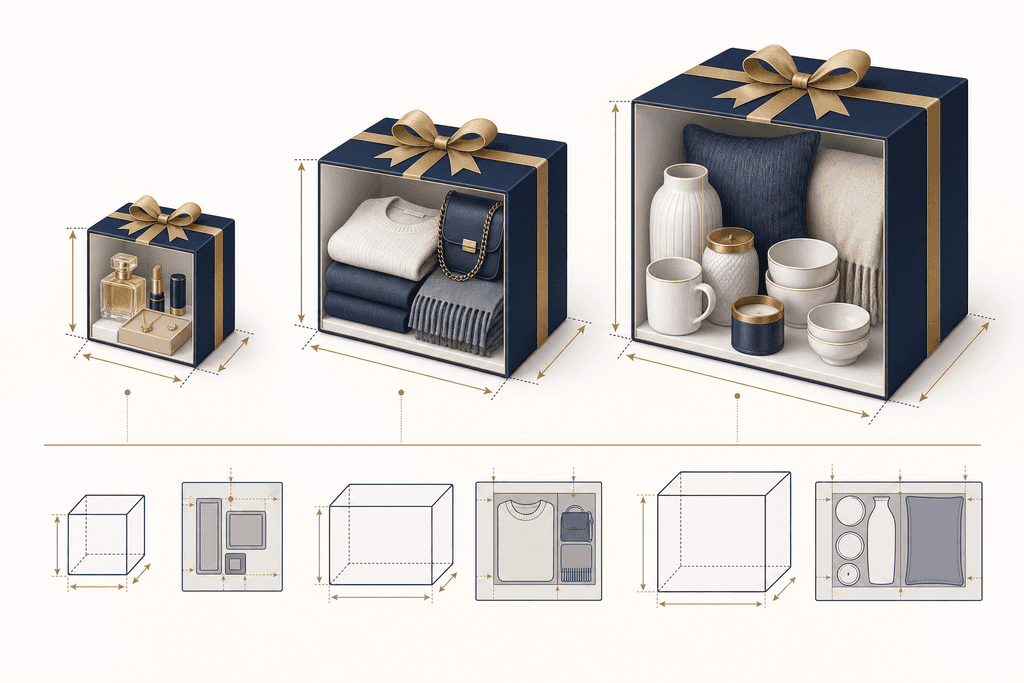
| Box Size | Dimensions (approx) | Best For |
|---|---|---|
| Small | 10 x 10 x 5cm | Jewellery, accessories |
| Medium | 20 x 15 x 10cm | Candles, mugs, cosmetics |
| Large | 30 x 25 x 15cm | Shoes, hampers, bundles |
| Extra Large | 40 x 30 x 20cm | Clothing, large gifts |
The cost difference between sizes matters more than you'd think. An oversized box costs more upfront, requires extra filler material, and increases your shipping weight. If you're sending 100 packages monthly and each oversized box adds $2 in unnecessary costs, that's $2,400 wasted per year.
Managing inventory gets easier when you stick to three or four versatile sizes rather than trying to stock a perfect box for every single product. Most e-commerce businesses find that two to four standard sizes cover 90% of their needs. You can always use creative filler arrangements to make smaller products look intentional in a slightly larger box, but going too big breaks the illusion of a thoughtful gift.
Choosing Gift Box Styles That Match Your Brand
The style of your gift box tells customers what kind of business you run before they even open it. A magnetic closure box with a matte finish signals premium quality and attention to detail, while a simple kraft cardboard box with a ribbon suggests eco-conscious values and authenticity. Neither approach is wrong, but they attract different customers and set different price expectations. Your packaging should match the promise your brand makes, not work against it.
Magnetic closure boxes create that satisfying snap when they close and feel luxurious to handle. They cost more than traditional lid-style boxes but work brilliantly for high-margin products where the unboxing experience justifies the price. Traditional two-piece boxes with separate lids cost less and still look professional, especially when you add tissue paper or ribbon.
Material Choices and Price Points
- Standard cardboard boxes offer the most affordable option and work for most businesses
- Rigid boxes (also called set-up boxes) provide a premium feel but cost 3-5 times more
- Kraft boxes appeal to eco-conscious customers and pair well with natural branding
- Coloured or printed boxes strengthen brand recognition but require minimum order quantities
Colour and finish choices matter because they create instant associations. Black boxes suggest luxury and sophistication. White boxes feel clean and modern. Kraft brown boxes communicate sustainability and handmade quality. At Packee, we stock various styles including pink cardboard boxes that work beautifully for beauty and lifestyle brands wanting to stand out.
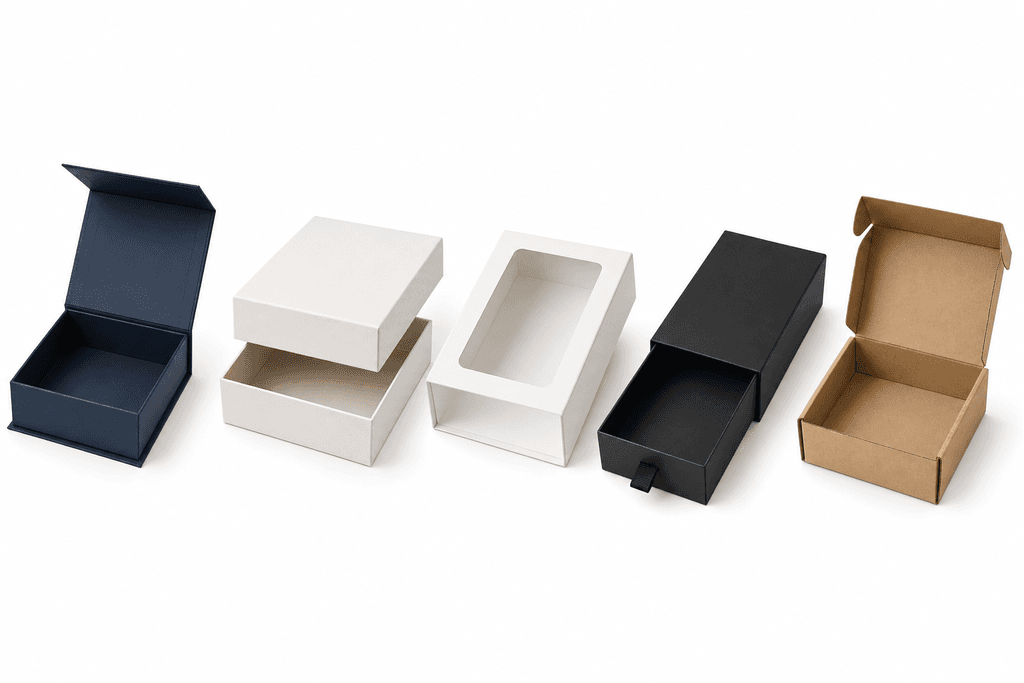
Window boxes make sense when your product's appearance is a major selling point. Handmade soaps, colourful macarons, or beautifully designed products benefit from visibility. But if your product needs explanation or doesn't photograph well on its own, a solid box with good interior presentation works better.
Eco-Friendly Options in Australia
Australian consumers increasingly care about sustainable packaging, with surveys showing over 60% prefer businesses that use recyclable materials. Recyclable cardboard boxes tick this box without the premium price tag of some specialty eco-materials. The key is making sure your boxes are actually recyclable in standard council bins, which most cardboard options are.
Rigid Luxury Boxes vs Standard Cardboard
Rigid boxes work best for: High-end jewellery, luxury cosmetics, corporate gifts, products over $100
Standard cardboard works best for: E-commerce orders, everyday retail, products under $50, eco-focused brands
Cost difference: Rigid boxes typically cost $3-8 each, cardboard boxes cost $0.50-2 each
Practical Uses and Applications Across Different Business Types
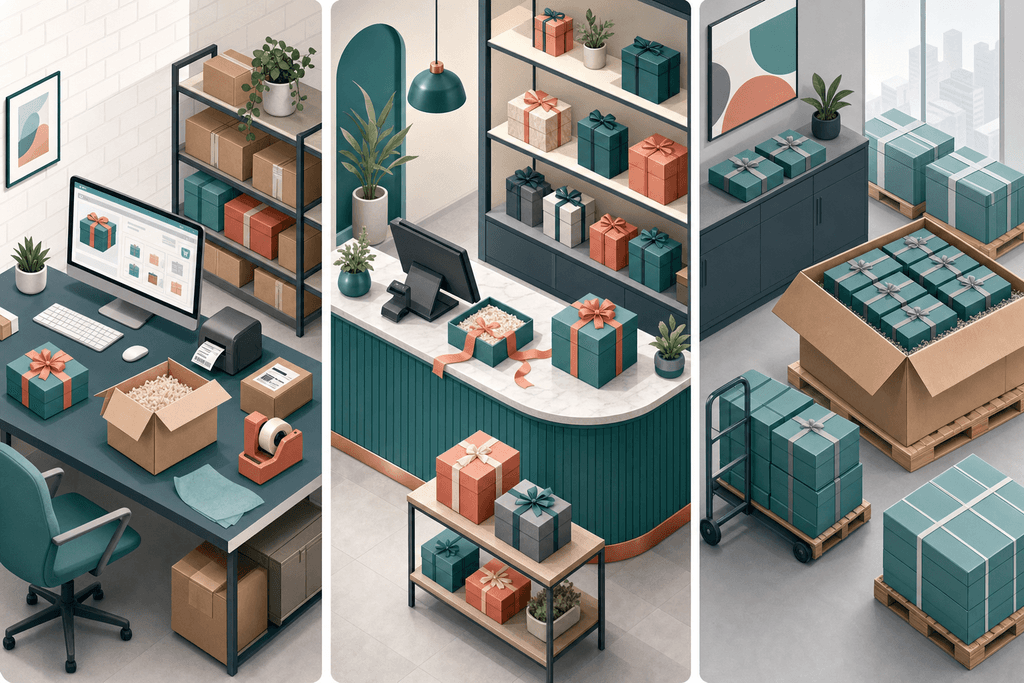
E-commerce businesses live and die by their unboxing experience because it's often the only physical touchpoint with customers. A subscription box company sending monthly deliveries needs consistent, recognisable packaging that builds anticipation. The box itself becomes part of the product. Smart online retailers use gift boxes even for regular orders because the perceived value increases, leading to better reviews and more social media shares without spending much extra.
Retail stores use gift boxes differently. They need options ready for walk-in customers who want purchases gift-wrapped on the spot. Having three standard sizes in your brand colours means staff can quickly package items without keeping customers waiting. The boxes double as shopping bags and create a more premium experience than plastic bags.
Corporate and Seasonal Strategies
Corporate gifting requires boxes that look professional in bulk. Companies ordering 50-500 gift boxes for clients need consistent quality and the ability to add branded elements without custom printing costs. Neutral colours like black, white, or kraft work because they suit any recipient.
Pack smarter. Ship with confidence.
Everything you need to pack, protect and send.
Discover dependable packaging for eCommerce, retail and wholesale—selected for quality, value and hassle-free shipping across Australia.
- Low minimum orders
- Samples available
- Australia-wide delivery
- Order boxes 6-8 weeks before Christmas or Mother's Day to avoid stock shortages
- Stock up on popular sizes during off-peak months when prices are more competitive
- Consider boxes that work for multiple occasions rather than holiday-specific designs
- Plan for 15-20% more volume than last year's peak period
Multi-purpose boxes reduce the headache of managing inventory. A simple white or kraft box works for birthdays, thank-you gifts, corporate presents, and regular product packaging. You can change the look completely just by swapping the tissue paper colour or adding different ribbon. We stock blue, green, champagne, and purple tissue paper that transforms the same box for different occasions.
Adding Value Without Inflating Costs
The perception of value matters more than the actual cost of your packaging. A $1 box filled with cream tissue paper and tied with simple twine can feel more special than a $3 box stuffed carelessly with bubble wrap. Small details like folding the tissue neatly or adding a small thank-you card cost almost nothing but dramatically improve how customers perceive your brand.
Checklist for Evaluating Gift Box Features
- Does the box size fit 90% of my products with minimal filler?
- Can I reorder this style easily without custom minimums?
- Does the material align with my brand values (eco-friendly, luxury, etc)?
- Will this box survive shipping without damage?
- Can I afford to use this box on every order or just special occasions?
- Does the style work for multiple seasons and occasions?
- Is assembly quick enough for my team during busy periods?
The right gift boxes balance cost, brand alignment, and practical functionality. Whether you're running an online store from home or managing a retail location, your packaging choices affect everything from shipping costs to customer loyalty. Start with versatile sizes in materials that match your brand, then refine based on what your customers respond to best.
Making Smart Financial Decisions With Gift Box Purchases
Most businesses lose between 15-20% of their potential profit margin by not properly calculating the true cost of their packaging materials. When you're buying gift boxes, the sticker price is just the beginning of what you'll actually spend. You need to factor in shipping fees, storage space costs, and the time your team spends managing inventory. The real cost per unit often runs 30-40% higher than the initial purchase price when you account for all these hidden expenses. Understanding this full picture helps you make smarter decisions about when to buy, how much to order, and which suppliers actually save you money.
Calculating Your Actual Packaging Expenses
Breaking down the true cost per unit requires looking beyond the box itself. Storage space in Australian warehouses typically costs between $25-45 per square metre monthly, and gift boxes take up considerable room when stored flat or nested.
- Shipping costs can add $0.50-$3.00 per unit depending on order size and location
- Storage fees accumulate monthly and impact cash flow for slow-moving inventory
- Labour time for unpacking, organising, and retrieving boxes adds hidden costs
- Minimum order quantities from some suppliers force you to tie up capital in excess stock
68% of customers say premium packaging influences their perception of product value, according to research on gift box selection strategies.
When Bulk Ordering Actually Saves Money
Bulk ordering makes financial sense when your monthly usage justifies the upfront investment and storage capacity. The break-even point typically occurs when you're using at least 200-300 gift boxes per month consistently.
- Calculate three months of projected usage based on historical sales data
- Compare per-unit costs at different quantity tiers from your supplier
- Factor in available storage space and associated monthly costs
- Ensure the savings exceed your cost of capital tied up in inventory
Packee offers free delivery on Sydney metro orders over $550, which changes the calculation significantly for local businesses. This threshold often aligns perfectly with a three-month supply for small to medium operations.
The Hidden Price of Cheap Packaging
Poor quality gift boxes cost businesses an average of 8-12% in returns and customer complaints. When a box arrives crushed or falls apart during opening, customers blame your brand, not the packaging supplier. The damage goes beyond the immediate return cost.
| Poor Packaging Impact | Average Cost |
|---|---|
| Product returns | 5-8% of orders |
| Negative reviews | 3x more likely |
| Lost repeat customers | 40% won't return |
| Brand perception damage | Long-term revenue loss |
Building Packaging Into Your Pricing Strategy
Smart businesses build packaging costs directly into their product pricing rather than treating it as an afterthought. The key is finding the balance between premium presentation and maintaining healthy profit margins. Most successful e-commerce brands allocate 8-15% of their product price to packaging, with gift boxes sitting at the higher end of that range. Packee's wholesale pricing structure helps businesses access quality gift boxes without sacrificing margins, making it easier to offer that premium unboxing experience customers expect.
Wrap-up
Choosing the right gift boxes comes down to three main things: getting the size right so nothing rattles around, picking a style that matches your brand, and understanding what you'll actually use them for. Most businesses find it easier to start with a few versatile options rather than ordering ten different types right away. You can always expand your range once you see what your customers respond to best.
Testing is probably the smartest move before you commit to bulk orders. Order a small batch of different sizes and styles to see how they work with your actual products. You might discover that what looked perfect online doesn't quite fit your needs in real life, or you might find that a simple kraft box works better than the fancy option you had in mind.
The finishing touches matter more than you'd think. Adding shredded tissue paper in colours like blue, champagne, or navy can turn a basic box into something that feels special when your customer opens it.
If you're still not sure which direction to go, we're happy to help you figure it out. You can reach out to our team at sales@packee.com.au or visit us at 115A Silverwater Rd Silverwater, NSW 2128 to chat about samples and what might work best for your specific situation. Sometimes a quick conversation clears up questions that hours of online research can't answer.
Common Questions About Gift Boxes
Choosing the right gift boxes for your business brings up plenty of practical questions. Whether you're just starting out or looking to refine your packaging strategy, these answers will help you make smarter decisions. We've gathered the most common questions we hear from Australian businesses about gift boxes and provided straightforward answers based on real-world experience.
What's the most versatile gift box size for small businesses?
The medium-sized gift box, typically around 20cm x 15cm x 10cm, works best for most small businesses because it fits everything from jewellery and cosmetics to small homewares and clothing items. This size strikes the perfect balance between looking substantial without wasting space or adding unnecessary postage costs. If you're ordering your first batch of gift boxes, starting with this size lets you test the waters before committing to more specialised dimensions.
How do I know if I should invest in custom printed boxes?
Custom printed boxes make sense when you're shipping at least 50-100 orders per month and want to build brand recognition. The upfront cost is higher, but the marketing value adds up quickly when customers share unboxing experiences on social media. For businesses just starting out or with lower order volumes, quality plain gift boxes with custom stickers or ribbon offer a more budget-friendly way to add personality without the minimum order commitments that custom printing requires.
Can I mix and match different box styles in one order?
Yes, most Australian packaging suppliers including Packee allow you to combine different gift box styles and sizes in a single order. This flexibility helps you stock up on various options without placing multiple separate orders. Just keep in mind that mixing styles might affect your per-unit pricing compared to ordering larger quantities of a single type.
What's the minimum order quantity for gift boxes?
Standard gift boxes typically have low minimum order quantities, often starting from just 25 or 50 units, making them accessible for small businesses and startups. Custom printed boxes usually require higher minimums, often 500-1000 units, because of the setup costs involved in printing. At Packee, we keep our minimums reasonable so businesses of all sizes can access quality packaging without overcommitting their budget or storage space.
How far in advance should I order for peak seasons?
Order your gift boxes at least 6-8 weeks before major shopping periods like Christmas, Mother's Day, or Valentine's Day. Supply chains get stretched during these times, and popular styles sell out quickly. Planning ahead also gives you time to test your packaging and make adjustments if needed, rather than rushing last-minute orders that might not arrive on time.
Are eco-friendly gift boxes more expensive?
Eco-friendly gift boxes typically cost 10-20% more than standard options, but the price gap is narrowing as sustainable materials become more common. Many Australian customers actively prefer businesses that use recyclable or biodegradable packaging, which can justify the slightly higher cost through improved customer loyalty and positive brand perception. The investment often pays for itself when you consider the marketing value of being environmentally responsible.