


Brown Paper Bags Buying Guide for Food, Retail, and Bulk
Why Your Choice of Brown Paper Bags Matters More Than You Think
A customer walks out of your store with a torn bag and groceries spilling onto the footpath, and suddenly your brand reputation takes a hit you didn't see coming. The right brown paper bags protect your products, satisfy customers, and save you money, while the wrong choice leads to complaints, damaged goods, and wasted stock. Whether you're running a café serving takeaway lunches, managing a retail store replacing plastic bags, or buying bulk brown paper bags for an e-commerce operation, understanding what separates a quality bag from a cheap disaster will transform how you approach this essential business supply.
What weight of brown paper bag is best for hot food takeaway?
Brown paper bags for hot food takeaway should be at least 70 GSM (grams per square metre) to prevent grease penetration and maintain structural integrity when holding warm items. Food-grade bags with a minimum basis weight of 60-80 GSM are standard across Australian food service operations.
How much cheaper are brown paper bags when bought in bulk?
Bulk purchases of brown paper bags typically reduce costs by 30-50% compared to small quantity orders, with the greatest savings occurring at order volumes of 5,000 units or more. Businesses ordering 10,000+ bags can expect wholesale pricing that is approximately half the retail per-unit cost.
What is the difference between SOS and flat bottom brown paper bags?
SOS (Self-Opening Sack) brown paper bags have a gusseted design that allows them to stand upright and open automatically, whilst flat bottom bags feature a reinforced rectangular base that provides superior stability for heavier items. Flat bottom bags generally support 2-3 times more weight than standard SOS bags of equivalent paper thickness.
Table of Contents
- Why Your Choice of Brown Paper Bags Matters More Than You Think
- Understanding Brown Paper Bag Types and Standards
- Choosing Brown Paper Bags for Food Service and Takeaway
- Selecting Brown Paper Shopping Bags for Retail Stores
- Buying Bulk Brown Paper Bags for Maximum Value
- Making the Smart Choice for Your Business Type
- Your Next Steps for Sourcing the Right Brown Paper Bags
- Common Questions About Buying Brown Paper Bags
Understanding Brown Paper Bag Types and Standards
Most people don't realise that not all brown paper bags are created equal, and using the wrong type can lead to torn bags, unhappy customers, and wasted money. The Australian market offers three distinct categories of brown paper bags, each designed for specific purposes and built to different standards. Whether you're packing hot chips at a takeaway shop or sending customers home with retail purchases, understanding these differences will save you headaches down the track.
The Three Main Categories
Brown paper bags fall into three primary groups based on their intended use. Food-grade bags meet strict Australian standards for direct food contact, retail shopping bags focus on presentation and moderate strength, and bulk industrial bags prioritise maximum weight capacity for heavy-duty applications.
Here's what sets each category apart:
- Food-grade bags must comply with Australian food safety regulations and are suitable for direct contact with edibles like bread, pastries, and takeaway meals
- Retail shopping bags prioritise appearance with options for handles, gussets, and custom printing whilst maintaining reasonable durability
- Bulk industrial bags sacrifice aesthetics for raw strength, often used in warehouses, construction sites, and agricultural settings
- Each category comes in various sizes, from small lunch bags to large grocery carriers
Australian Standards and Safety Requirements
When you're buying brown paper bags for food in Australia, they need to meet specific safety standards set by Food Standards Australia New Zealand. These regulations ensure the paper doesn't transfer harmful chemicals or affect the taste of your products. Major retailers like Coles have actually pushed the industry forward by setting higher benchmarks for their brown paper shopping bags, which has raised the bar across the board.
The weight capacity ratings aren't just random numbers either. They're tested under Australian conditions and account for factors like humidity and handling during transport. At Packee, our brown paper bags meet all relevant Australian standards whilst offering competitive pricing for businesses of all sizes.
GSM Ratings Explained
GSM stands for grams per square metre, and it's the key number that tells you how thick and durable a paper bag will be. Think of it like thread count in sheets - higher numbers generally mean stronger bags, but you don't always need the highest rating for every job.
Here's a practical breakdown of common GSM ratings:
| GSM Rating | Bag Type | Typical Uses | Weight Capacity |
|---|---|---|---|
| 40-60 GSM | Light duty | Bakery items, small snacks | Up to 2kg |
| 70-90 GSM | Medium duty | Takeaway food, light retail | 2-5kg |
| 100-120 GSM | Heavy duty | Groceries, bottles, books | 5-8kg |
| 130+ GSM | Extra heavy | Bulk items, industrial use | 8kg+ |
Choosing the right GSM rating depends on what you're packing and how far customers need to carry it. A bakery selling a single loaf of bread doesn't need the same strength as a bottle shop sending customers home with wine. According to packaging industry experts, matching your GSM to your actual needs can cut costs by up to 30% without compromising quality.
How Major Retailers Shaped the Market
When Coles and other major Australian supermarkets phased out single-use plastic bags, they didn't just switch to any old brown paper bags. They set specific requirements for strength, handle attachment, and base construction that became the new benchmark. Now when businesses buy brown paper bags in bulk, they often reference "Coles-style" bags as a quality standard, even if they're not supplying the supermarket chain itself.
This shift has actually benefited smaller businesses because suppliers now stock higher-quality options at better prices due to increased production volumes. The standardisation also makes it easier to compare products across different suppliers, though you'll still find significant price variations depending on order quantities and delivery locations.
Choosing Brown Paper Bags for Food Service and Takeaway
Most food businesses go through hundreds of brown paper bags each week, but not all bags are created equal when it comes to safety and performance. If you run a cafe, bakery, restaurant, or food truck, the bags you choose need to meet Australian food-grade certification standards to ensure they're safe for direct food contact. These certifications guarantee the paper hasn't been treated with harmful chemicals and won't transfer anything nasty to your customer's food. The difference between a regular kraft bag and a food-grade one might not be visible, but it matters for compliance and customer safety.
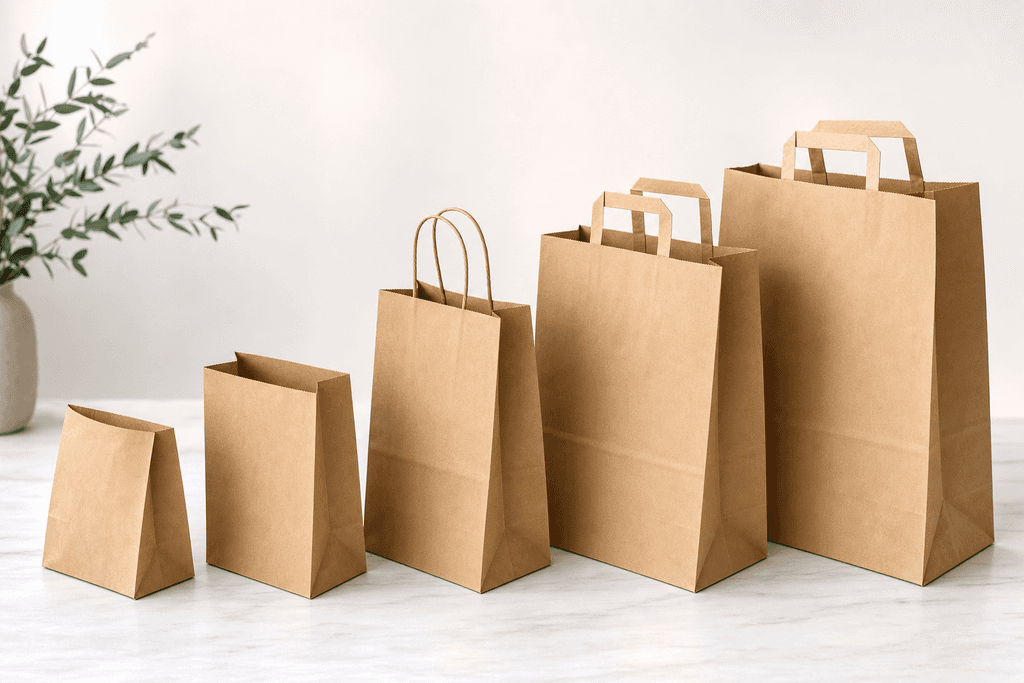
The type of food you're packaging determines whether you need grease-resistant or standard kraft paper bags. Hot chips, pastries, and anything oily will soak through standard paper in minutes, creating a mess and a poor customer experience.
- Grease-resistant bags work best for fried foods, buttery pastries, pizza slices, and burgers
- Standard kraft bags suit dry goods like bread, cookies, sandwiches, and produce
- White paper bags often have better grease resistance but cost slightly more
- Double-bagging is sometimes needed for very hot or greasy items regardless of bag type
Sizing matters more than most business owners realise when they first start buying brown paper bags for food. A bag that's too small won't close properly and risks spills, while oversized bags waste money and look unprofessional. Common bakery sizes range from small (about 140mm x 240mm) for single pastries up to large (about 305mm x 405mm) for multiple items or loaves of bread. Takeaway meal bags typically start around 260mm x 360mm and go up from there depending on container sizes.
Handle options change how customers interact with your bags and affect the price per unit. Flat handles (the kind you see on brown paper shopping bags at Coles) offer the most comfortable carrying experience but add cost. Twisted paper handles are cheaper and still functional for lighter items. No-handle bags work fine for counter service where customers aren't walking far, and they're the most economical choice for high-volume operations.
- Verify Australian food-grade certification for compliance
- Match grease resistance to your specific menu items
- Measure your typical food containers before ordering sizes
- Test handle strength with your heaviest common orders
- Consider moisture from hot foods and condensation
- Calculate cost per bag at different volume levels
Temperature and moisture control become critical when you're packing hot foods. Steam from hot pies or coffee cups can weaken paper bags quickly, especially around the base and handles. Some businesses solve this by using bags with reinforced bottoms or by placing hot items in containers first. The material composition of food packaging paper affects how it handles heat and moisture, which is worth understanding if you're dealing with temperature extremes.
Bulk buying dramatically reduces your cost per unit, but the savings vary depending on volume. A carton of 500 bags might cost you 25 cents per bag, while ordering 5,000 could drop that to 12 cents each. For a busy cafe going through 200 bags daily, that difference adds up to thousands of dollars annually.
Selecting Brown Paper Shopping Bags for Retail Stores
Retail stores face a different challenge than food businesses when choosing brown paper shopping bags. Your bags need to survive the journey from checkout to car to home, all while making customers feel good about their purchase. The bag becomes part of your brand experience whether you like it or not. A flimsy bag that tears in the car park creates frustration that customers associate with your store, even if your products are excellent.
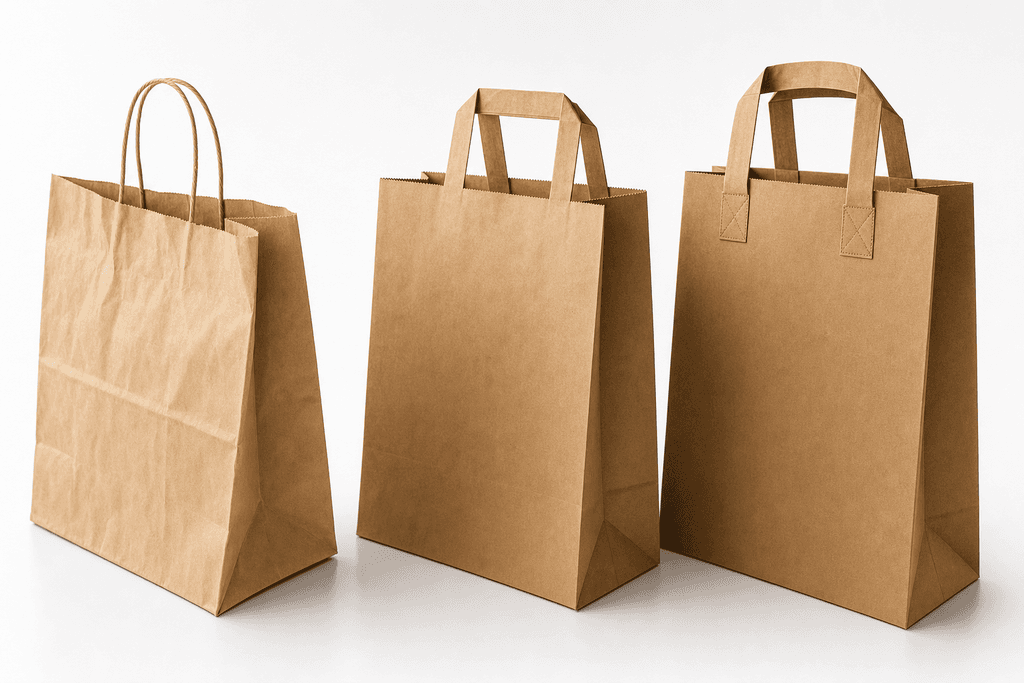
Standard retail sizes follow a fairly predictable pattern across the industry. Small bags (around 180mm x 240mm) work for jewellery, cosmetics, or small accessories. Medium bags (roughly 260mm x 360mm) suit clothing boutiques and gift shops. Large bags (about 320mm x 420mm) handle bulkier items like shoes, homewares, or multiple purchases.
| Bag Type | Paper Weight | Handle Type | Best For |
|---|---|---|---|
| Economy | 70-80 GSM | Twisted or none | Light items, markets |
| Standard | 100-110 GSM | Twisted handles | General retail |
| Premium | 120-150 GSM | Flat handles | Boutiques, heavy items |
Handle strength and comfort matter more than most retailers initially think. Customers carrying bags for ten minutes through a shopping centre notice uncomfortable handles that dig into their hands. Flat handles distribute weight better and feel more premium, which is why you see them on bags from higher-end retailers. The trade-off is cost, with flat-handled bags typically running 30-50% more than twisted-handle versions.
Base gusset width determines how well your bags stand up and how much they can actually hold. A narrow gusset (around 80mm) creates a slim profile that looks elegant but limits capacity. Wider gussets (120mm or more) let bags accommodate bulkier items and stand upright on their own, which customers appreciate when packing their car boot.
Customisation with your logo and branding turns plain brown paper bags into mobile advertising, but minimum order quantities usually start around 1,000 units. Custom printing costs vary based on colours, design complexity, and order volume. Plain bags from suppliers like Packee cost less upfront and work perfectly fine for many retail operations, especially when you're just starting out or testing different sizes.
The quality of your bags sends a message about your business. Thick, sturdy bags with comfortable handles suggest you care about details and quality. Thin bags that barely make it to the car suggest you're cutting corners. This perception affects whether customers return and what they tell their friends about your store.
Buying Bulk Brown Paper Bags for Maximum Value
Pack smarter. Ship with confidence.
Everything you need to pack, protect and send.
Discover dependable packaging for eCommerce, retail and wholesale—selected for quality, value and hassle-free shipping across Australia.
- Low minimum orders
- Samples available
- Australia-wide delivery
Suppliers package bulk brown paper bags in cartons with specific quantities that vary by bag size and style. A carton might contain anywhere from 250 to 1,000 bags depending on dimensions. Understanding these carton quantities helps you calculate storage needs and compare prices accurately across different suppliers. Most businesses find that ordering at least 2-3 months of supply at once provides the best balance between cost savings and storage requirements.
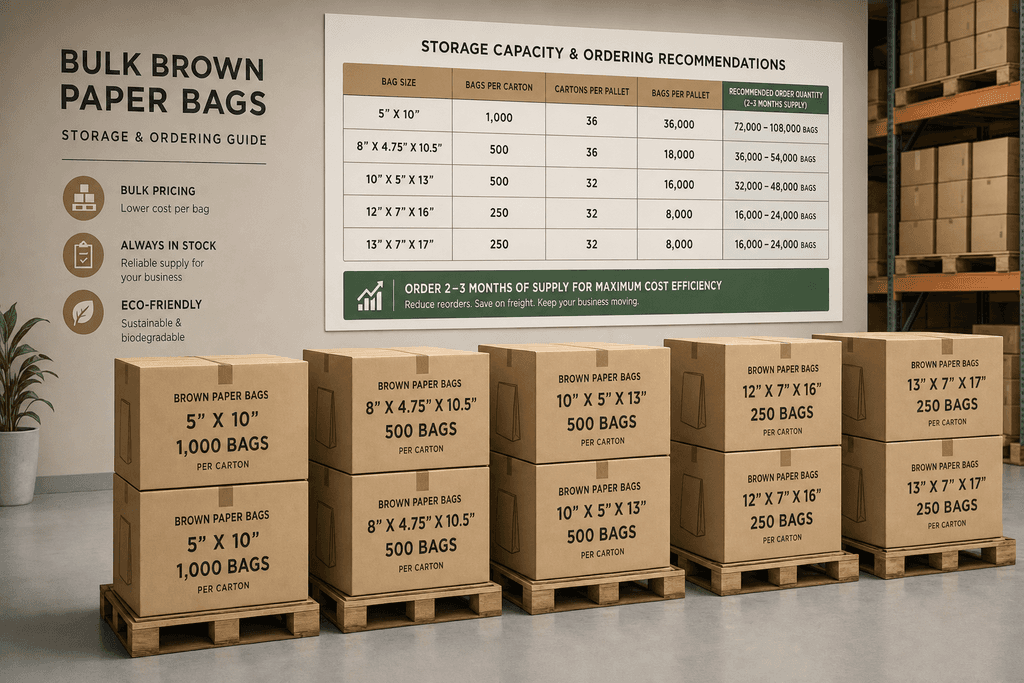
Price breaks typically occur at specific volume thresholds that vary by supplier. You might see one price for 1-5 cartons, a lower price for 6-10 cartons, and even better rates for 11+ cartons. The key is calculating your actual cost per bag at each tier, not just looking at the total invoice amount.
- Small businesses using 50-100 bags weekly benefit from ordering 1-2 cartons monthly
- Medium operations using 200-500 bags weekly should consider quarterly bulk orders
- High-volume businesses using 1,000+ bags weekly need monthly or bi-monthly deliveries
- Storage space often becomes the limiting factor before budget does
Storage considerations matter more than most business owners expect when buying bulk brown paper bags. A pallet of bags takes up roughly 1.2 square metres of floor space and stacks about 1.5 metres high. Paper bags need to stay dry and away from moisture, which means you can't just stick them in any corner of your stockroom. Shelf life isn't usually a concern since paper bags last years if stored properly, but crushing and damage from poor storage definitely is.
Balancing upfront costs with long-term savings requires honest assessment of your cash flow and storage capacity. A small cafe might save $200 annually by buying in bulk, but if that ties up $800 in inventory and fills half their storage room, the savings might not justify the hassle. Larger operations see more dramatic savings that make bulk buying a no-brainer.
Minimum order quantities vary significantly between suppliers. Some require full pallet orders, while others like Packee offer more flexibility for smaller businesses. The right ordering strategy for your business depends on your volume, storage, and cash flow situation.
Delivery costs can eat into your bulk savings if you're not careful. Many suppliers offer free shipping thresholds, and Packee provides free delivery on orders over $550 within Sydney metro areas. For businesses outside Sydney, comparing total delivered cost rather than just product price gives you the real picture. Sometimes ordering slightly more to hit a free shipping threshold actually costs less overall than a smaller order with delivery fees.
Making the Smart Choice for Your Business Type
Most businesses waste money on brown paper bags because they choose based on price alone, not performance. The difference between a bag that tears at the checkout and one that safely carries groceries home isn't just about customer satisfaction—it directly impacts your bottom line through returns, complaints, and lost repeat business. E-commerce sellers face completely different challenges than retail stores, yet many suppliers treat all brown paper bags the same. Understanding how your specific business model affects bag selection helps you avoid costly mistakes and keeps customers coming back.
How Business Models Shape Bag Requirements
E-commerce businesses need brown paper bags that survive shipping stress, while brick-and-mortar stores prioritise immediate handling strength and visual appeal. Online sellers should focus on bags with reinforced bottoms and higher GSM ratings because parcels get dropped, stacked, and jostled during transit. Retail stores can sometimes use lighter bags since customers carry them directly, though quality still matters for brand perception.
- E-commerce requires bags with 80+ GSM for shipping durability
- Retail stores can use 60-70 GSM for lighter items sold in-person
- Food businesses need grease-resistant options regardless of sales channel
- Bulk brown paper bags make sense for high-volume retailers with storage space
Seasonal Planning and Ordering Strategies
Seasonal demand swings catch businesses off guard every year, leading to rushed orders at premium prices or excess inventory taking up valuable storage. Christmas, Easter, and back-to-school periods can triple your bag usage, yet many businesses still order the same quantity year-round. Planning ahead with bulk brown paper bags for food and retail during off-peak months saves money and prevents stockouts when you need them most.
| Ordering Approach | Cost Per Unit | Storage Needs | Best For |
|---|---|---|---|
| Small frequent orders | Higher | Minimal | New businesses |
| Bulk purchasing | 30-40% lower | Significant | Established retailers |
Sustainability Expectations and Branding Decisions
Customer expectations around eco-friendly packaging have shifted from nice-to-have to deal-breaker status, particularly for food and retail businesses. Brown paper shopping bags signal environmental responsibility without requiring explanation, which matters when 73% of Australian consumers consider sustainability in purchasing decisions according to research on kraft paper preferences. The question isn't whether to offer sustainable options anymore—it's whether custom branding justifies the extra cost for your specific customer base.
- Plain brown paper bags work perfectly for price-conscious markets
- Custom branding adds 40-60% to costs but builds recognition
- Start with quality plain bags before investing in custom printing
- Test customer response to sustainability messaging first
Quality Versus Price Comparison
Cheap bags that fail cost more than quality bags that perform when you factor in customer complaints and replacement costs. A bag that costs 15 cents but tears 20% of the time actually costs more than a 25-cent bag with a 2% failure rate. Packee's range addresses different business needs with competitive pricing on bulk brown paper bags that balance cost and reliability, so you're not choosing between your budget and your reputation.
| Factor | Cheap Bags | Quality Bags |
|---|---|---|
| Upfront cost | Lower | Higher |
| Failure rate | 15-25% | 2-5% |
| Customer complaints | Frequent | Rare |
| True cost per use | Often higher | Lower overall |
Your Next Steps for Sourcing the Right Brown Paper Bags
Choosing the right brown paper bags comes down to three main things: what type you need (food-grade, retail, or bulk), what size works for your products, and how many you'll order at once. Getting these factors right means your customers get their items safely while you keep costs under control. Most businesses find that ordering samples first saves them from expensive mistakes down the track.
Testing a few different sizes and styles before committing to a large order is probably the smartest move you can make. What looks perfect on a website might not work with your actual products, and you won't know until you hold them in your hands.
Our range at Packee covers everything from brown paper bags for food to brown paper shopping bags for retail, plus bulk brown paper bags when you need serious volume. We keep our pricing competitive because we know packaging costs add up fast when you're running a business. The free delivery on orders over $550 in Sydney metro areas helps too, especially when you're stocking up.
If you've got specific requirements or want to chat about wholesale pricing, the team at sales@packee.com.au can walk you through the options. Sometimes the best bag for your business isn't the obvious choice, and that's where a quick conversation can save you time and money.
Common Questions About Buying Brown Paper Bags
When you're buying brown paper bags for your business, the same questions pop up again and again. Most business owners want to know if they're getting the right quality, whether their bags are actually eco-friendly, and how wholesale options compare to what's available at the supermarket. These aren't just random concerns either, because choosing the wrong bag can mean broken products, unhappy customers, or wasted money on bags that don't suit your needs.
Are Coles brown paper bags the same as wholesale options?
Not really. Coles brown paper bags are designed for general grocery use and typically come in limited sizes with basic specifications. Wholesale brown paper bags offer much more variety in sizes, thicknesses, and features like handles, gussets, and food-safe certifications. Plus, buying bulk brown paper bags from suppliers like Packee gives you better pricing per unit and options specifically designed for retail or food service applications.
What GSM rating do I need for heavy items?
For heavy items, you'll want bags with at least 80-100 GSM (grams per square metre). Light items like clothing or baked goods work fine with 60-70 GSM bags. If you're packing bottles, canned goods, or anything over 3kg, look for reinforced bags with 100+ GSM and twisted handles for extra strength.
Can brown paper bags be recycled or composted in Australia?
Yes, most brown paper bags can be recycled through standard kerbside recycling programs across Australia. Pure kraft paper bags without plastic windows or heavy coatings are also compostable in commercial composting facilities. Just make sure to remove any non-paper elements like plastic handles or stickers before recycling. Check with your local council for specific guidelines, as some areas have different requirements.
What's the minimum order quantity for bulk brown paper bags?
This varies by supplier, but most wholesale providers set minimum orders between 250 to 1000 bags depending on the size and style. At Packee, we offer flexible quantities to suit different business sizes, and orders over $550 qualify for free delivery in Sydney metro areas. Smaller businesses can still access wholesale pricing without committing to massive quantities.
How do I know if a bag is food-safe certified?
Look for bags specifically labelled as food-grade or food-safe, which means they meet Australian food safety standards. These bags are made without harmful chemicals or inks that could contaminate food. Reputable suppliers will clearly state food-safe certification in their product descriptions. If it's not mentioned, ask before buying, especially for direct food contact applications like bakeries or takeaway restaurants.
What's the difference between kraft paper and regular brown paper bags?
Kraft paper is made through a specific chemical process that creates stronger, more durable fibres compared to regular brown paper. This makes kraft brown paper shopping bags more tear-resistant and better at holding weight. Regular brown paper bags might be cheaper but they're usually thinner and less reliable for retail or food use. Most quality brown paper bags for food and retail are made from kraft paper because of its superior strength.