



Boxes and Cardboard Explained for Packing and Shipping
A single wrong box choice can cost your business hundreds of dollars in wasted shipping fees and damaged goods every month. Most e-commerce owners don't realise that using oversized boxes triggers dimensional weight charges, while flimsy cardboard leads to returns and unhappy customers. This guide shows Australian business owners exactly how to select the right boxes and cardboard for packing and shipping, covering everything from material strength to cost-saving strategies that protect both your products and your bottom line.
What is the difference between single wall and double wall cardboard boxes?
Single wall cardboard consists of one layer of fluted corrugated material between two flat linerboards and is suitable for items up to 20 kilograms, while double wall cardboard has two layers of fluting and can safely hold items weighing 20 to 60 kilograms.
How do you calculate the right box size for shipping in Australia?
The correct box size should allow 5 centimetres of cushioning material on all sides of the product, and the total cubic weight (length × width × height in centimetres divided by 5000) should be calculated to determine Australia Post or courier shipping costs.
What percentage of cardboard packaging is recycled in Australia?
Australia recycles approximately 87 per cent of cardboard and paper packaging, making it one of the most successfully recovered materials in the country's waste stream.
Table of Contents
Understanding Cardboard Basics
Most people think all boxes and cardboard are basically the same, but that's like saying all cars are identical because they have four wheels. The type of cardboard you choose can mean the difference between your products arriving safely or getting crushed during transit. When you're running a business that ships products, knowing what you're actually buying matters more than you might think. Understanding the basics helps you avoid paying too much for packaging you don't need, or worse, choosing something too flimsy that costs you money in damaged goods and unhappy customers.
Corrugated Versus Regular Cardboard
Here's where things get interesting. Corrugated cardboard is actually made of three layers - two flat sheets with a wavy layer sandwiched in between. That wavy bit is called fluting, and it's what gives boxes their strength. Regular cardboard (sometimes called paperboard or cardstock) is just one thick layer with no fluting at all.
You'll find regular cardboard used for things like cereal boxes, shoe boxes, and greeting cards. It's fine for lightweight items that don't need much protection. Corrugated cardboard is what you want for shipping and moving because it can handle serious weight and impacts.
- Corrugated cardboard has multiple layers with fluting for strength
- Regular cardboard is single-layer and best for lightweight items
- Corrugated boxes protect against crushing and impacts during shipping
- Regular cardboard costs less but offers minimal protection
What Fluting Means for Your Boxes
The fluting in corrugated cardboard isn't just there to look fancy. Those waves act like tiny arches that distribute weight and absorb impacts. Different flute sizes exist for different jobs, and they're named with letters that don't make much sense at first.
The most common types you'll see are A-flute, B-flute, C-flute, and E-flute. C-flute is the standard choice for most shipping boxes because it balances strength with a reasonable thickness. At Packee, our mailing boxes use appropriate fluting based on the size and intended use, so you don't have to become a cardboard expert to get the right protection.
- A-flute is thickest and best for fragile items needing cushioning
- C-flute works for general shipping and stacking
- B-flute is thinner and good for die-cut boxes
- E-flute is thin enough for retail packaging but still protective
Cardboard Grades and Construction Terms
When you're ordering boxes and cardboard, you'll hear terms like "single-wall" and "double-wall" thrown around. Single-wall means one layer of fluting between two flat sheets. Double-wall has two layers of fluting with three flat sheets total. It's stronger but also heavier and more expensive.
The grade of cardboard refers to how much weight it can handle. This is measured by something called the Edge Crush Test (ECT) or the Bursting Strength Test. Higher numbers mean stronger boxes that can stack higher without collapsing.
- Single-wall construction suits most everyday shipping needs
- Double-wall handles heavy items or long-distance shipping
- ECT ratings tell you stacking strength
- Bursting strength measures resistance to breaking under pressure
| Cardboard Type | Construction | Weight Capacity | Common Uses |
|---|---|---|---|
| Regular Cardboard | Single layer | Up to 2kg | Retail packaging, light items |
| Single-wall C-flute | 3 layers | Up to 30kg | Standard shipping boxes |
| Single-wall B-flute | 3 layers | Up to 25kg | Books, small electronics |
| Double-wall | 5 layers | Up to 60kg | Heavy items, furniture |
| E-flute | 3 layers (thin) | Up to 15kg | Subscription boxes, cosmetics |
Most businesses don't need to memorise all these specifications. The key is matching your packaging to what you're actually shipping. Using double-wall boxes for lightweight clothing wastes money, while single-wall boxes for heavy machine parts will end badly.
Common Box Types for Australian Businesses
Most Australian businesses use regular slotted cartons (RSC) for about 80% of their shipping needs because they're cheap, sturdy, and easy to assemble. These are the standard brown boxes you see everywhere, with flaps that meet in the middle when you close them. They work for almost everything from books to kitchen appliances, which is why they've become the default choice for warehouses and retail stores across the country. The beauty of RSCs is that they come in dozens of sizes and can handle products of different weights without needing special equipment to seal them. But here's what most people don't realise: using the wrong box type can cost you money in damaged goods and unhappy customers.
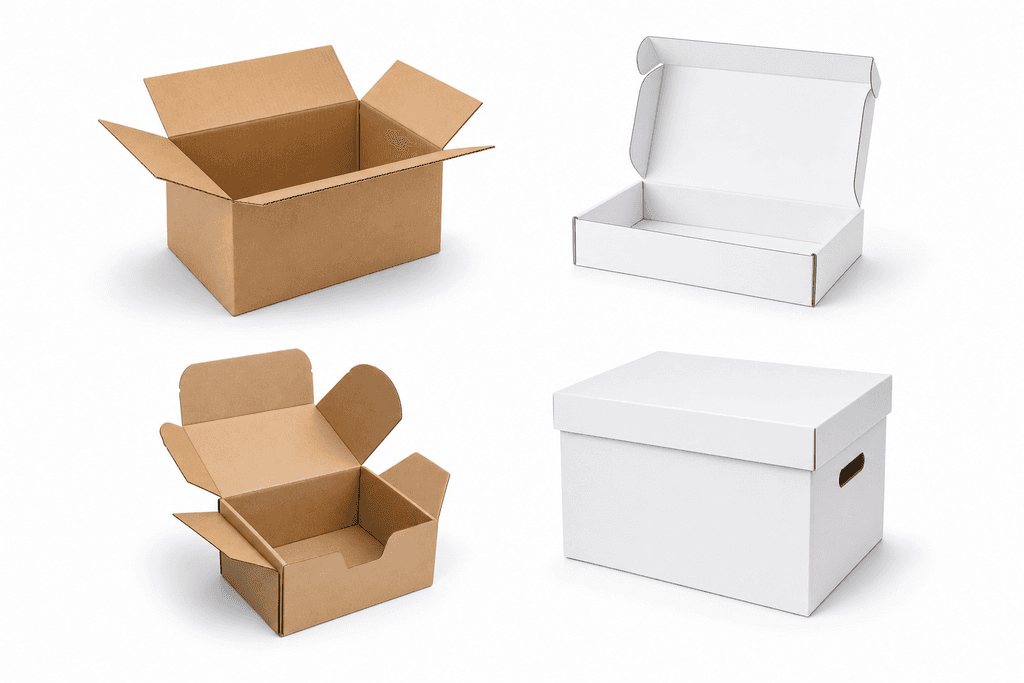
Mailer boxes have become essential for e-commerce businesses that care about the unboxing experience. These are the boxes that open from the top with a tuck-in flap, often printed with your branding. They're perfect for clothing, cosmetics, and subscription boxes because they look professional and don't need tape to close.
- Regular slotted cartons (RSC) work best for general shipping and storage when appearance isn't the main concern
- Mailer boxes suit online stores selling directly to consumers who want a premium unboxing moment
- Die-cut boxes fit oddly shaped products like bottles, electronics, or gift sets that need custom protection
- Archive boxes help with document storage and seasonal inventory that needs to stack neatly in warehouses
Die-cut boxes solve problems that standard boxes can't handle. When you're shipping wine bottles, fragile electronics, or products with unusual dimensions, a custom die-cut box holds everything in place without excess movement. The cardboard is cut and scored to fold into exactly the shape you need, which means less void fill and better protection during transit.
Archive boxes might seem boring, but they're lifesavers for businesses that need to store paperwork, seasonal stock, or backup inventory. They come with attached lids and handles, stack without crushing, and keep everything organised when you're digging through storage six months later. At Packee, we stock all these box types because different businesses have different needs, and using the right one makes your job easier.
Choosing the Right Box Size and Strength
Box dimensions are measured from the inside, not the outside, which trips up a lot of first-time buyers. When you see a box listed as 300mm x 200mm x 150mm, those numbers represent the internal space available for your product. The cardboard thickness adds a few millimetres to the external dimensions, but what matters is whether your product actually fits inside. Getting this wrong means ordering boxes that are too small or wasting money on boxes that are way too big for what you're shipping.
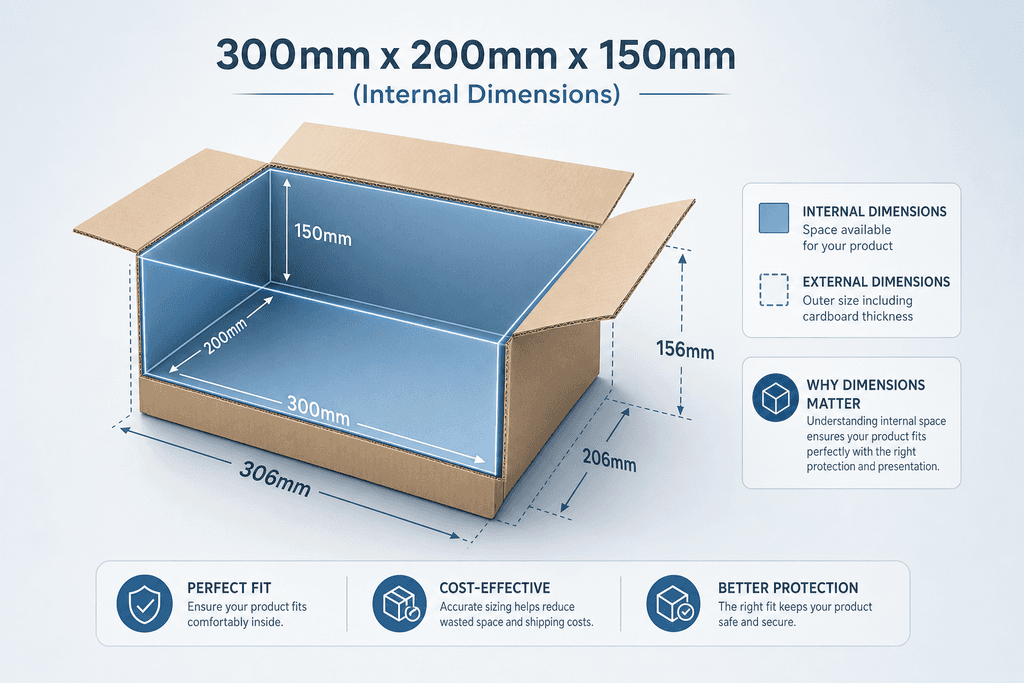
Matching your box size to your product isn't just about making things fit. Every extra centimetre of empty space means you'll pay more for void fill materials like bubble wrap or paper, plus higher shipping costs because carriers charge based on dimensional weight.
| Cardboard Grade | ECT Rating | Max Weight | Best For |
|---|---|---|---|
| Single wall | 32 ECT | Up to 30kg | Light products |
| Single wall | 44 ECT | Up to 45kg | Medium weight |
| Double wall | 48 ECT | Up to 80kg | Heavy items |
| Double wall | 61 ECT | Up to 100kg | Very heavy |
The Edge Crush Test (ECT) rating tells you how much pressure a box can handle before the cardboard walls collapse. A 32 ECT box works fine for lightweight items like clothing or small electronics, but you'll need 44 ECT or higher for anything over 20 kilograms. Most people confuse this with bursting strength, which measures how much force it takes to puncture the cardboard, but ECT matters more for stacking boxes in storage or during shipping.
Compression strength determines how many boxes you can safely stack on top of each other. Double wall cardboard handles heavy stacking better than single wall, which is why warehouses use it for bottom pallets. The cardboard grade you choose should match both your product weight and how you plan to store or ship it, and that's where having options matters.
Our range at Packee covers everything from light-duty mailer boxes to heavy-duty double wall cartons because we've seen what happens when businesses try to save money with the wrong strength rating. Damaged products cost more than the few dollars you'd save on cheaper boxes, and proper cardboard packaging protects your products while reducing waste.
How to Order the Right Boxes Without Guesswork
If you are ready to buy, the simplest path is to match three things: your product dimensions, its packed weight, and the shipping method. Measure the item after it is wrapped, add enough room for padding, then choose the lightest box grade that still protects the product. This avoids paying for oversized cartons or over-specced cardboard you do not need.
For most Australian e-commerce orders, a practical buying checklist looks like this:
- Measure the packed item in millimetres: length, width, height
- Add space for void fill or protective wrap
- Check the total shipment weight, not just product weight
- Choose single wall for lighter everyday parcels and double wall for heavier or more fragile goods
- Confirm bundle quantity so you are not overbuying stock that sits on shelves
If your products fall between standard sizes, go with the box that leaves the least empty space while still allowing protection. For branded retail presentation, mailer boxes often make more sense than plain cartons. For warehouse dispatch, regular slotted cartons are usually the most economical choice.
Cost Saving Strategies with Boxes and Cardboard
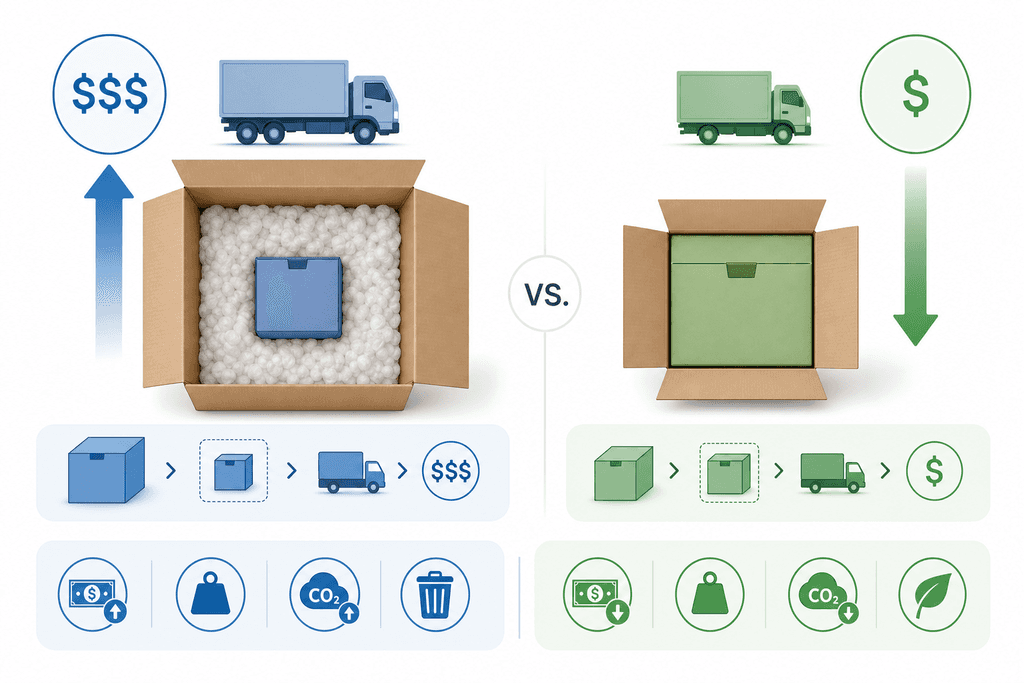
Right-sizing your boxes can cut your shipping costs by 20-30% because carriers charge for dimensional weight, not just actual weight. When you ship a 2kg product in a box that's twice the size it needs to be, you're paying for all that empty air. The formula is simple: measure your product, add 2-3cm on each side for protection, and order boxes that match those dimensions. This also means less void fill material, faster packing times, and fewer damaged items because products don't bounce around during transit.
Buying in bulk drops your per-unit cost significantly, but only if you're actually going to use all those boxes. A pack of 25 boxes might cost $2 per box, while ordering 500 of the same box brings it down to $1.20 each.
- Calculate your monthly usage before committing to bulk orders
- Standard sizes cost less than custom boxes for orders under 1,000 units
- Custom sizes make sense when you ship the same product repeatedly and standard boxes waste too much space
- Storage space matters because bulk orders need somewhere to sit until you use them
Pack smarter. Ship with confidence.
Everything you need to pack, protect and send.
Discover dependable packaging for eCommerce, retail and wholesale—selected for quality, value and hassle-free shipping across Australia.
- Low minimum orders
- Samples available
- Australia-wide delivery
The economics of custom versus standard boxes depends on your volume. If you're shipping 50 orders a week with the same product, custom boxes save money within a few months. But if you sell different products with varying sizes, stocking multiple standard box sizes gives you more flexibility without the upfront investment of custom tooling.
Balancing cardboard strength with cost means not over-engineering your packaging. A 32 ECT box costs about 30% less than a 44 ECT box in the same size, so using the heavier grade for lightweight products just burns money. Test your packaging with actual shipping conditions, and you'll find the sweet spot between protection and cost.
We offer wholesale pricing at Packee with free delivery on orders over $550 within Sydney metro areas, which helps businesses manage their cash flow better. Instead of making small orders every week and paying delivery fees each time, you can stock up once a month and get everything delivered to your warehouse at 115A Silverwater Rd without extra charges. The true cost per shipment includes the box, void fill, tape, labour time, and shipping fees, so when you're comparing suppliers, add up all those factors instead of just looking at box prices.
Understanding why cardboard boxes are essential for business operations helps you make smarter purchasing decisions that protect your products and your profit margins at the same time.
Boxes, Cardboard and the Extras You May Actually Need
Buyers looking for boxes and cardboard are often also trying to work out what else must be ordered at the same time. In most cases, you do not need a long list of add-ons. You only need the basics that prevent damage and keep packing efficient.
The most commonly useful extras are packing tape, void fill, labels, and protective wrap. Heavy cartons may also need reinforced tape. Fragile items can need inserts or dividers, while apparel and other non-breakables often need very little beyond the box itself.
- Packing tape: essential for standard shipping cartons
- Void fill or kraft paper: stops movement inside the box
- Bubble wrap or protective paper: helps cushion breakable items
- Labels: useful for dispatch speed and stock control
- Box inserts: best for bottles, gift sets, and multi-item orders
If you are trying to keep costs down, start with a small core range of box sizes plus one reliable void fill option. That setup handles most orders without tying cash up in too many SKUs.
Sustainability and the Future of Cardboard Packaging
Australia recycles approximately 87% of all cardboard and paper packaging, making it one of the highest recovery rates for any packaging material in the country. This impressive statistic reveals why boxes and cardboard remain the smartest choice for businesses trying to reduce their environmental footprint without breaking the bank. The material breaks down naturally, gets reused multiple times, and costs less to process than most alternatives. When you compare cardboard to plastic packaging, the environmental gap becomes even more obvious.
| Cardboard recycling rate | 87% in Australia |
| CO2 savings per tonne | 3.3 tonnes avoided |
| Times cardboard can be recycled | 5-7 cycles |
Recycled Versus Virgin Cardboard
Recycled cardboard uses 75% less energy to produce than virgin cardboard made from fresh wood pulp. The trade-off comes down to strength and appearance, since virgin cardboard offers better structural integrity and a cleaner look for premium products. Most businesses find that recycled cardboard works perfectly fine for shipping boxes and everyday packaging needs.
- Recycled cardboard costs 10-15% less than virgin material
- Virgin cardboard provides superior crush resistance for heavy items
- Recycled options still meet Australian packaging standards for most applications
- Mixed-fibre boxes combine both materials for balanced performance
Telling Customers About Your Green Packaging
Your packaging choices matter to customers, but only if they know about them. Adding a simple stamp or sticker that says "100% recyclable" or "made from recycled materials" takes seconds and builds trust. Many Australian shoppers actively choose brands that use sustainable boxes and cardboard, especially in the e-commerce space where unboxing experiences get shared online.
- Print recycling instructions directly on the box
- Use minimal ink and avoid plastic tape when possible
- Include a brief note about your commitment to sustainability
Packee offers a range of recycled cardboard boxes that don't compromise on protection or cost. The reality is that sustainable packaging doesn't have to be expensive when you work with suppliers who prioritise both environmental responsibility and competitive pricing. Businesses can tick the sustainability box while keeping their shipping costs under control, which matters more than ever as customers expect both values from the brands they support.
Getting Your Box Strategy Right
Choosing the right boxes and cardboard for your business comes down to three main things: protecting your products, keeping costs reasonable, and meeting customer expectations around sustainability. Most businesses waste money by either over-packaging (which costs more and annoys customers) or under-packaging (which leads to damaged goods and returns). The sweet spot is finding boxes that fit your products properly without excess space, use the right cardboard strength for the weight, and align with what your customers actually care about.
Your packaging choices directly affect your profit margins and customer reviews. A box that's too big means you're paying for wasted space in shipping costs, while a box that's too flimsy means you're paying for replacements and dealing with unhappy customers. The right cardboard thickness and box size can cut your shipping costs by up to 30% compared to using whatever's on hand.
Take a look at what you're currently using and ask yourself a few questions. Are you using the same box size for everything when you could optimise for different product types? Are customers complaining about excessive packaging or damaged items? Could switching to recycled cardboard options improve your brand image without breaking the bank?
At Packee, our mailing boxes come in various sizes specifically designed for common e-commerce products, which helps businesses avoid the guesswork. The goal isn't to have the fanciest packaging on the block, it's to have packaging that works efficiently for your specific needs.
Now let's tackle some of the most common questions business owners ask us about boxes and cardboard.
Before You Buy: Quick Checks for Product Fit, Strength and Quantity
A fast pre-purchase check can save you from ordering the wrong packaging. First, test one sample size with your real product and packing materials. Second, check whether the box will be pallet-stacked, courier-handled, or stored for long periods, because that affects the strength you need. Third, estimate how many boxes you use in an average month so you can buy enough to lower unit cost without clogging your storage area.
It also helps to confirm a few practical details before checkout:
- Internal dimensions, since box sizing is usually listed from the inside
- Board construction, such as single wall or double wall
- Suitability for your product category, such as mailers for apparel or stronger cartons for heavier goods
- Pack quantity and delivery timing
- Whether you need plain stock boxes or custom printed packaging later
If you are unsure, choose a small run of the most likely size first and trial it across a week of orders. That is usually the cheapest way to get your box strategy right before committing to larger volumes.
Common Questions About Boxes and Cardboard
Choosing the right boxes and cardboard for your business can feel overwhelming with all the options available. Australian business owners often have similar questions when it comes to selecting packaging that's both cost-effective and reliable. We've gathered the most common queries we hear from customers across Sydney and beyond. These answers will help you make smarter decisions about your packaging needs.
What's the difference between single wall and double wall cardboard?
Single wall cardboard has one layer of fluting (the wavy bit) sandwiched between two flat sheets, making it lighter and perfect for items under 20kg. Double wall cardboard has two layers of fluting, which means it can handle heavier items up to 40kg and provides better protection during shipping. Most e-commerce businesses use single wall for everyday products, whilst double wall is better for fragile or heavy items that need extra cushioning.
How do I know what box strength I need?
The strength you need depends on what you're shipping and how far it's travelling. For lightweight items under 5kg going short distances, standard single wall boxes work fine. If you're shipping items over 10kg or sending packages interstate where they'll be handled multiple times, you'll want stronger double wall options. At Packee, our team can help match your products with the right box strength based on weight and shipping requirements.
Can I use recycled boxes for shipping?
You can reuse boxes as long as they're still structurally sound without tears, water damage, or crushed corners. The problem is that cardboard loses strength each time it's used, so previously shipped boxes might not protect your products as well. Most courier companies won't cover damage claims if you've used old boxes, which can cost you more in the long run than buying new ones.
What box sizes are most cost-effective for shipping?
Smaller boxes almost always cost less to ship because couriers charge based on both weight and dimensional size. Using a box that's too large means you're paying for empty space, which adds up quickly when you're shipping regularly. The trick is finding boxes that fit your products snugly with just enough room for protective padding, and buying these common sizes in bulk to get better pricing.
How should I store cardboard boxes?
Keep your boxes and cardboard flat in a dry area away from moisture, which can weaken the material and make it useless for shipping. Stack them on pallets or shelving rather than directly on concrete floors where dampness can seep in. If you're storing flat-packed boxes, they take up minimal space and stay in better condition than pre-assembled ones.
Where can I buy quality boxes in bulk in Sydney?
Several suppliers across Sydney offer bulk boxes and cardboard, including larger operations like Stanley Packaging and EB Packaging. Packee provides free delivery on orders over $550 within Sydney metro areas, which makes managing your packaging supplies easier without the hassle of pickup or extra freight costs. Buying in bulk always gets you better pricing, and having stock on hand means you're never scrambling when orders come in.